Our History
Since 1495
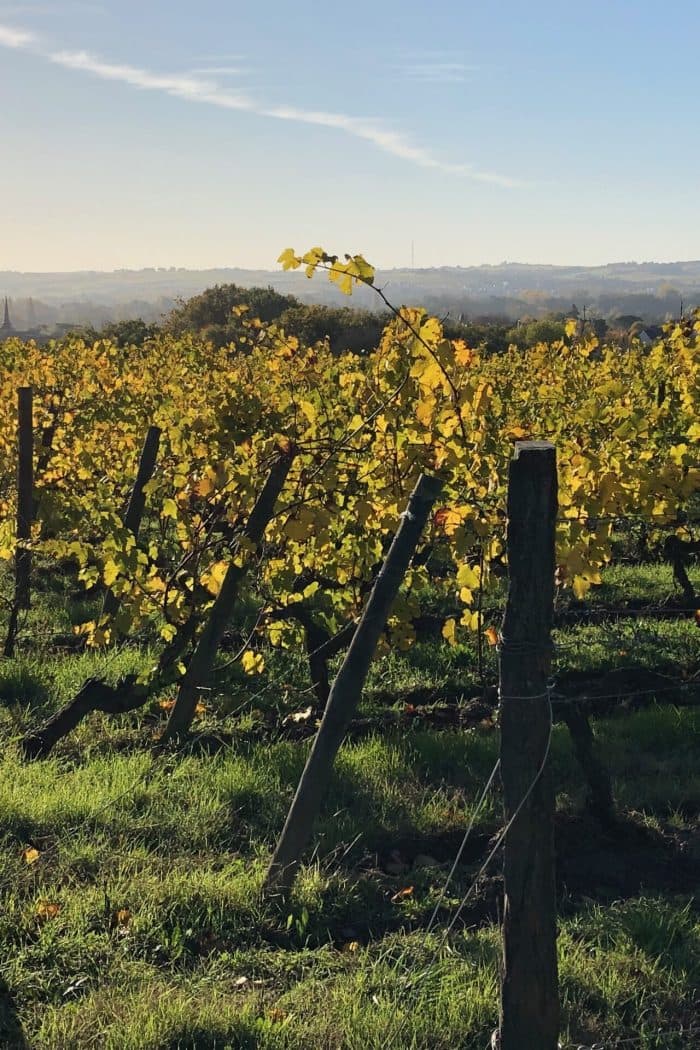
Our vineyard, whose history dates back to 1495, is located in Anjou on the Loire River, anchored in one of the exceptional terroirs of the prestigious Savennières appellation.
Since the French Revolution, five generations of women have inherited this Savennières property. Each in her own way has contributed to what constitutes our identity today.
A feminine heritage
Five generations of women shaped the identity of the estate
1798-1857
Zélie Brichet
Heiress of Château des Vaults and its vineyard, Zélie married François-Claude Fourmond-Desmazières, a Parisian financier, in 1832. While her husband, the town mayor, strove to develop the territory by creating the small Forges station on France's first railway that passed between the Loire and the village, Zélie created the agricultural parkland linked to the vineyard by the hillside valleys, thus transforming the estate with the era's ideas on the necessary balance between different farm spaces.
1836-1889
Marie Louise, Viscountess Walsh then de Chemellier
Their only daughter married Viscount Olivier Walsh then, as a widow, the Viscount de Chemellier. She enlarged the château with the grand salon pavilion to showcase the beautiful collection of 17th-century Aubusson tapestries and provide a setting for receptions and cultural events, concerts, and conferences.
1889-1923
Marque de Las Cases
Marie Louise bequeathed the property to Barthélémy II, Marquis de Las Cases, for his goddaughter Marque de Las Cases, the marquis's eldest daughter. Barthélémy II was the grandson of Emmanuel de Las Cases, Napoleon's memorialist, who had invested in the Chalonnes mines run by his sons Emmanuel Pons then Barthélémy I in 1844, boosting the regional economy through a very innovative process for coal extraction under the Loire.
1923-1972
Michèle de Féligonde
Childless, Marque de Las Cases bequeathed the property to her niece Michèle de Féligonde who managed the estate for 28 years with her husband Jacques Bazin de Jessey, creating EARL Les Vins Domaine du Closel, chairing the Savennières Appellation, expanding the vineyard area, launching a communication dynamic by welcoming numerous journalists.
Michèle was very attached to the 'garden' aspect of the landscape, the evolution of wine quality by questioning practices in the vineyard and cellar, to move toward respect for biodiversity. She had the versatility of chenin and the different style possibilities inscribed in the Savennières AOC specifications: dry, semi-dry, sweet.
2001-2024
Evelyne de Pontbriand
Her daughter, Evelyne Bazin de Jessey, wife of Gaël de Pontbriand, maintains and develops this balance, this remarkable ecosystem, and surrounds herself with a young and highly professional team to lead the vineyard, cellar, and wine tourism toward an ambitious adventure.
Certified organic in 2007, the estate is now biodynamic in the very prestigious Biodyvin circle. President twice of the Savennières AOC, Evelyne strives to make the family of producers of this AOC work together on both technical aspects and the brand: Savennières AOC, its landscape, and its chenin wines.
She chairs the Chenin Academy, founded with Patrick Baudouin to promote this grape variety by monitoring research worldwide and partnership with the South African Chenin Association. She co-founded the Paulée d'Anjou and the Baroque Music Festival in Savennières.
The wines are now crafted by Antoine Fardeau who gathers around him a dedicated team with the continuous support of the family.
Historical testimony
In this regard, it may be useful to know what the cultivation conditions of our vineyards were at the beginning of the eighteenth century, according to a lease granted on July 23, 1737, by the prior of Saint-Romain de Savennières, dependent on the abbey of Saint-Serges, of the congregation of Saint-Maur:
"The farmer is required to work and shape the vines belonging to the priory, each year in all their ordinary ways; namely: to uncover, prune and dig, and properly make the furrows, channels; to do all the layering that will be found good to do; to fertilize them with good manure and earth; all in proper time and season, without being able to draw the vine to long wood."
Pierre-Constant Guillory (1796-1878), called Guillory senior, an important winemaker of the time (19th century). He began transformations in his Savennières vineyard and created the Agricultural and Industrial Society of Maine-et-Loire to promote agricultural progress.
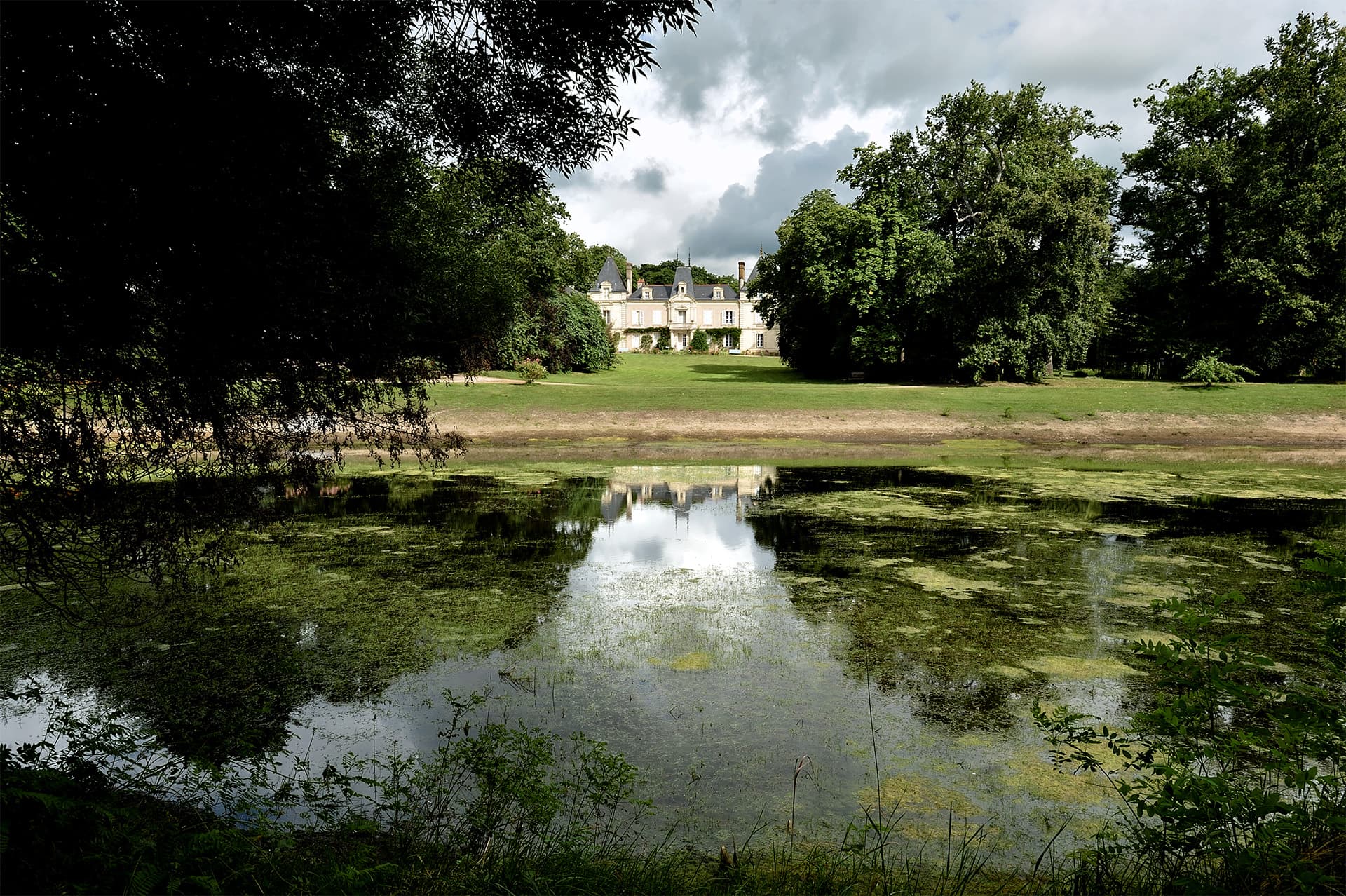
Château des Vaults
At the heart of this Angevin landscape stands the Château des Vaults, in classic 17th-century style, surrounded by its agricultural parkland with meadows, centuries-old trees, and its former vegetable garden.
The estate today
Domaine du Closel today extends over 14 hectares of vines on hillsides and wooded valleys, with its branch of the Loire River (la Boire).
Domaine du Closel, a family business that cultivates the vineyard, relies on a passionate and experienced team. Antoine Fardeau, our head of cultivation, embodies this transmission of gestures and winemaking know-how, combining ancestral tradition and innovative approaches.
Fine wines are not produced naturally; they are the result of the expertise of the men and women of our team, working with animals—horses and sheep—with tools, facing the soil, facing the Vitis Vinifera plant, its fruits, and the juice they produce.