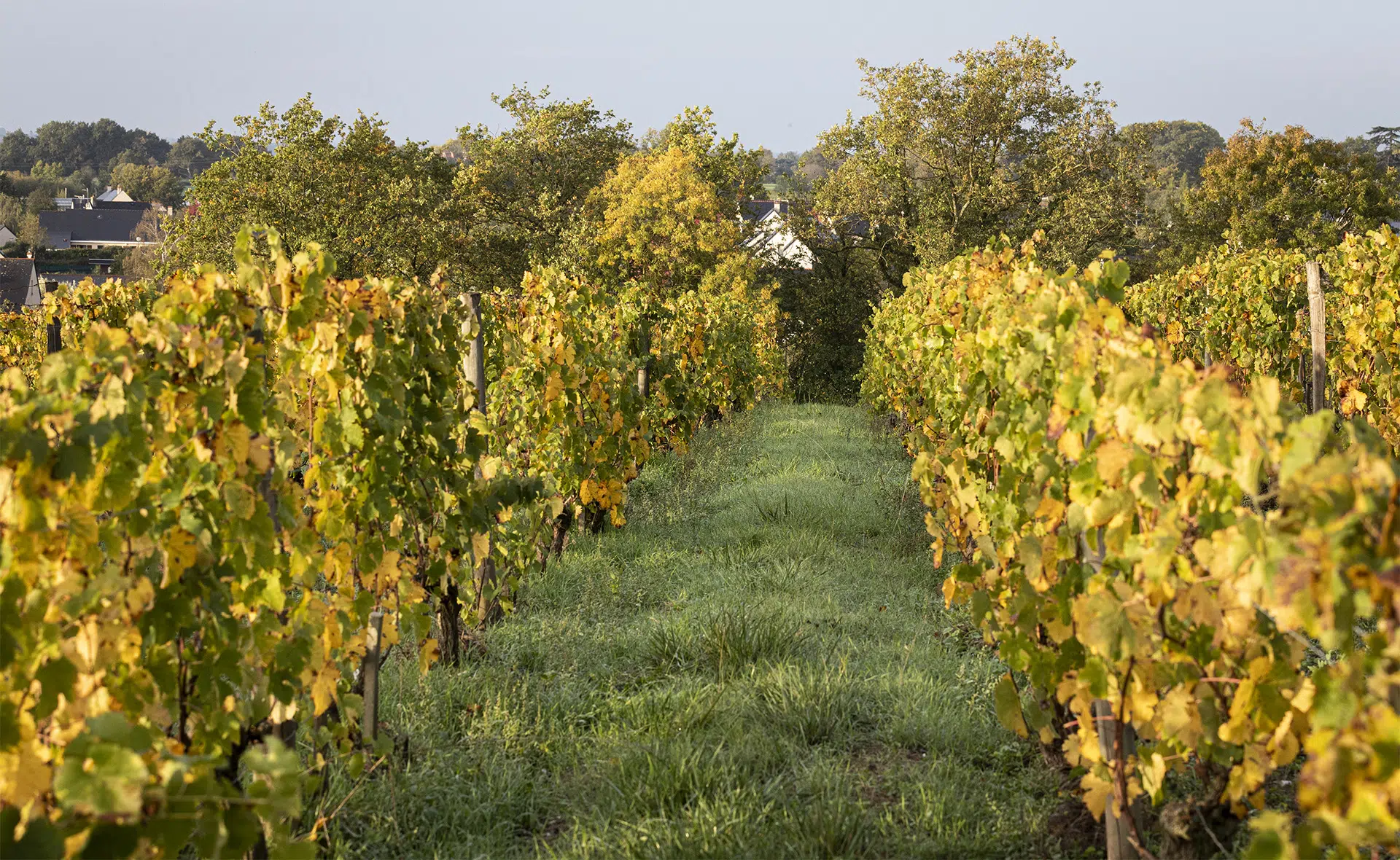
The Savennières Appellation
An exceptional terroir
The Savennières appellation extends over the hillsides on the right bank of the Loire, in Maine-et-Loire. This wine region is renowned for the excellence of its dry white wines made from Chenin.
Geology and terroir
The subsoil of Savennières consists of volcanic and metamorphic rocks dating from the Paleozoic era. Subject to erosion for nearly 300 million years, it presents a very fragmented topography. This is why we mainly find sandstone, rhyolite, spilite, and phtanite at the surface, which are very resistant.
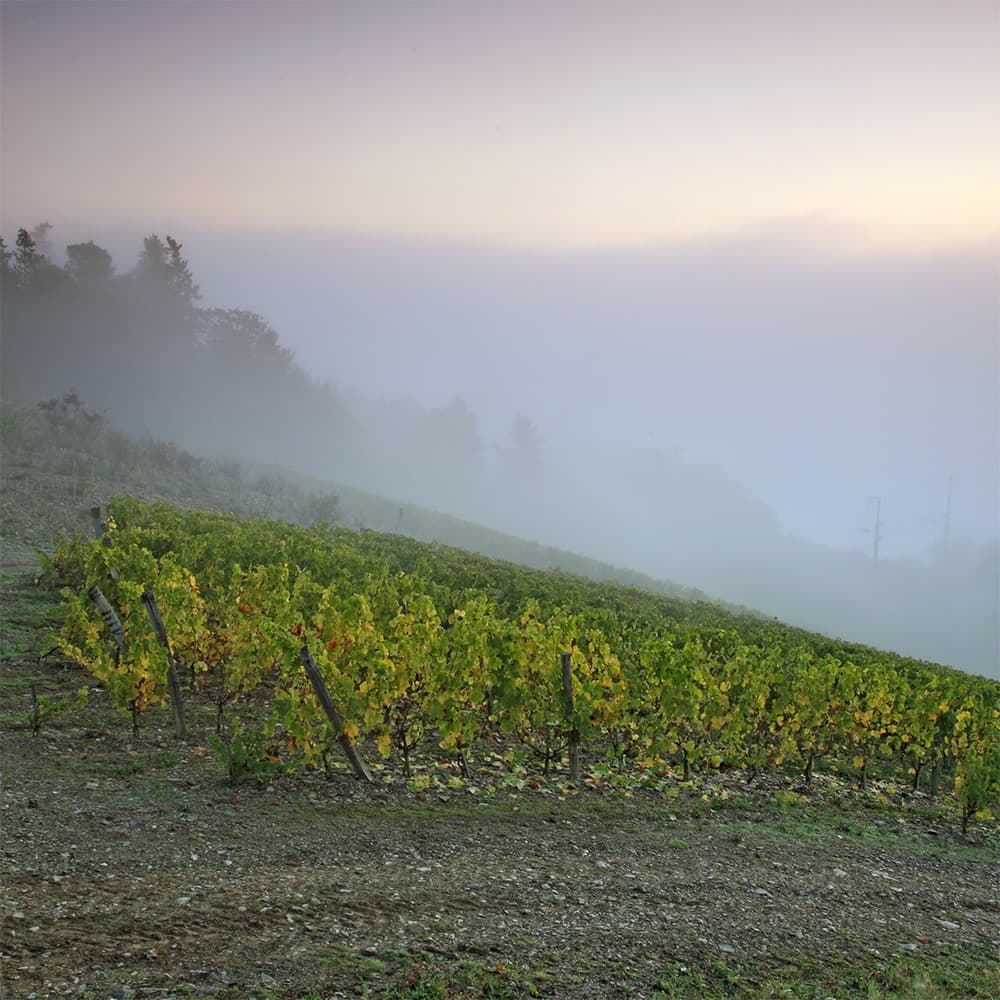
History and heritage
Colonized by great abbeys in the Middle Ages, Savennières was transformed during the Renaissance under the impetus of the Angevin bourgeoisie, finally authorized to trade wine and eager to have country houses or closeries, then in the 19th century during the construction of the Paris-Nantes railway which triggered a revival of the local economy.
Wealthy Parisians became interested in these hillsides, often allied with women who owned land in the commune, and had beautiful residences built and agricultural parklands created around the vineyard.
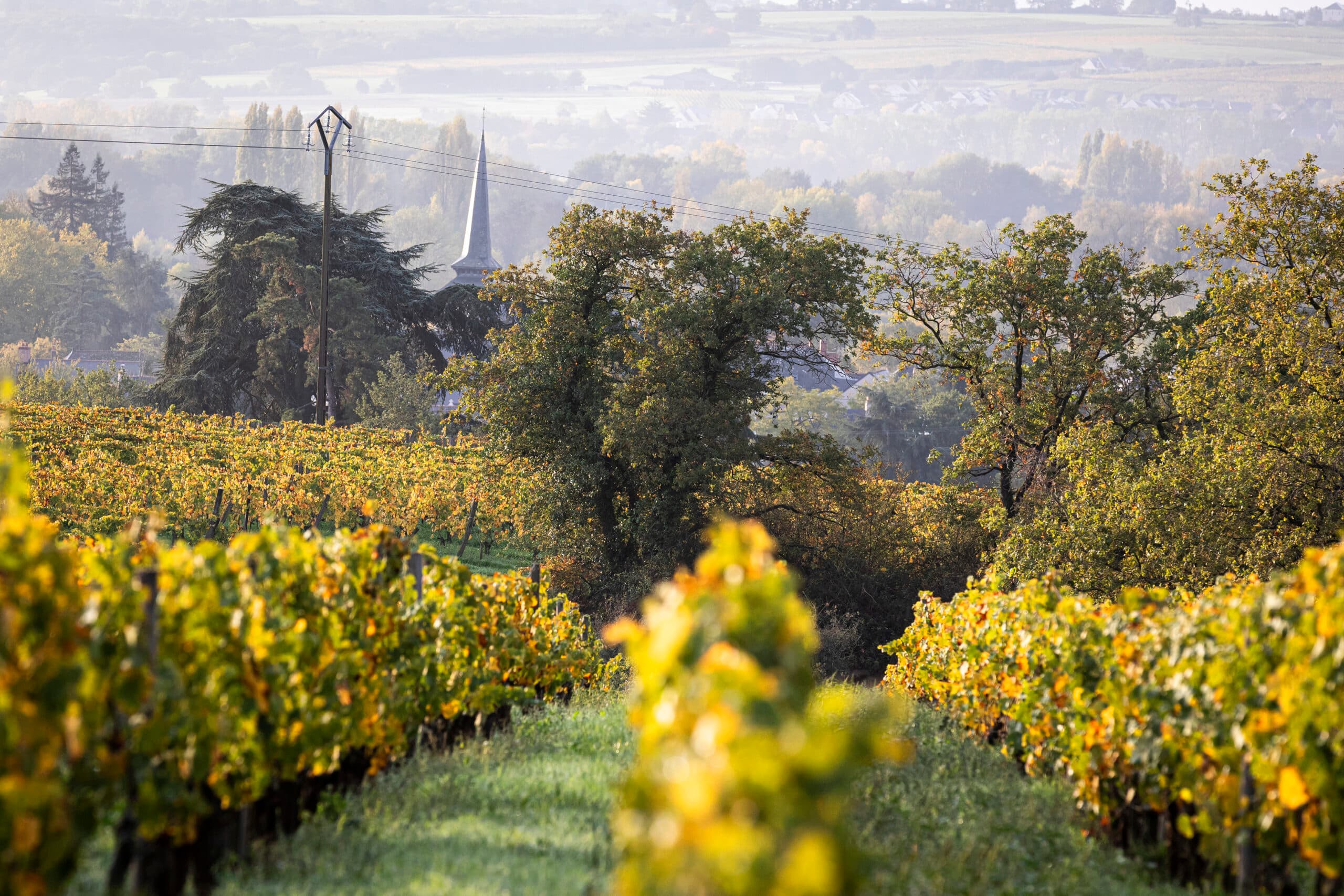
The landscape and coulées
This green belt with its remarkable trees makes Savennières a unique landscape crossed by coulées: Grand clos de la Coulée de Serrant, La Roche aux Moines, and the Clos du Papillon.
The coulées offer a unique exposure and a microclimate conducive to growing Chenin, allowing slow maturation of the grapes and the expression of wines of great complexity.
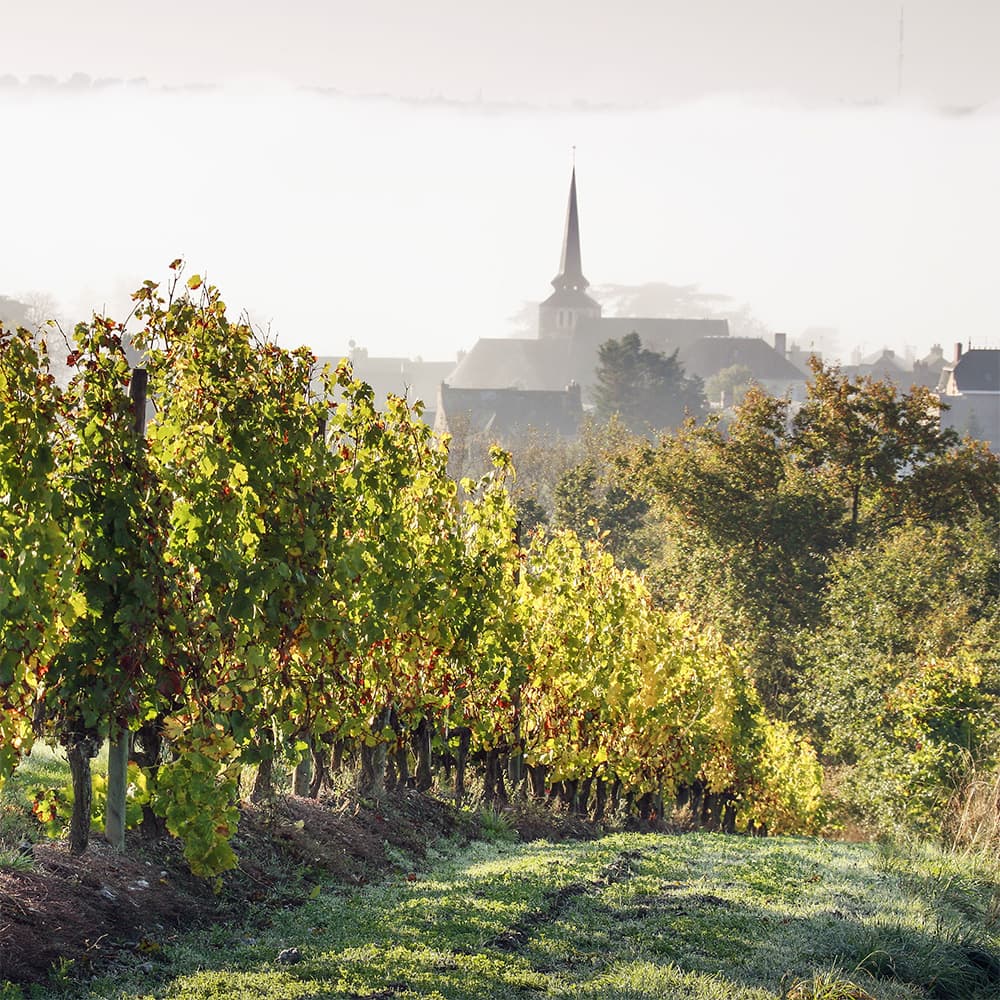
Le Clos du Papillon
Notre parcelle emblématique, située dans une coulée exceptionnelle de Savennières, bénéficie d'un microclimat unique et d'une exposition optimale.
Les vignes, plantées sur des schistes et des grès, produisent des vins d'une grande complexité et d'une remarquable capacité de garde.